

Your hepatitis B viral load, explained: what the HBV DNA number means
One number on your report decides most of what happens next. Here is what IU/mL means, which bands matter, and how to tell a real fall from lab noise.

If you are living with hepatitis B, one line on your pathology report ends up carrying more weight than all the others: HBV DNA, reported in IU/mL. It is the number your doctor uses to decide whether to start treatment, whether treatment is working, and how often you need to come back. It is also the number most often misread — usually because it is written in scientific notation, in the wrong units, or without the reference range that gives it meaning.
This guide explains what the number is measuring, which thresholds actually change clinical decisions, and how to tell a genuine improvement from ordinary laboratory variation.
What HBV DNA actually measures#
HBsAg tells you the virus is present. HBV DNA tells you how much of it is actively replicating in your blood right now. The test is a quantitative PCR: it copies any viral genetic material in the sample until there is enough to measure, then works backwards to the starting quantity.
Because it measures replication rather than immune response, HBV DNA moves faster than any other hepatitis B marker. It can fall a hundredfold in twelve weeks of effective antiviral therapy, while HBsAg may not budge for years.
IU/mL versus copies/mL#
Older reports and some laboratories still use copies/mL. International units were introduced so results could be compared between labs and between assays. The approximate conversion is one IU/mL to about five copies/mL — so 2,000 IU/mL is roughly 10,000 copies/mL. Approximate is the operative word: never convert a result and then compare it to a threshold as though it were exact. If your laboratory changes assay or units, ask for the old and new results side by side.
The bands that change decisions#
There is no single "safe" number, and guidelines differ between the European, American and Asian-Pacific liver societies. But the following bands are where management genuinely changes, and they are worth knowing before your next appointment.
| HBV DNA | What it usually indicates | What typically follows |
|---|---|---|
| Not detected (below the assay limit, often <10–20 IU/mL) | No measurable replication — either well-suppressed on treatment, or an inactive phase | Continue monitoring; never stop antivirals on this result alone |
| <2,000 IU/mL with a normal ALT | Often the inactive carrier state (HBeAg-negative chronic infection) | Monitoring every 6–12 months, no treatment in most guidelines |
| 2,000–20,000 IU/mL | A grey zone — the ALT, fibrosis stage, age and family history decide | Closer monitoring; liver stiffness or biopsy assessment often added |
| >20,000 IU/mL with a raised ALT | Active hepatitis with ongoing liver injury | Treatment is usually recommended |
| >10,000,000 IU/mL (often HBeAg-positive, younger patients) | High replication, frequently with a normal ALT — the immune-tolerant phase | Monitoring or treatment depending on age and fibrosis |
Two things stand out from that table. First, the viral load is never interpreted alone — ALT, fibrosis and HBeAg status sit beside it. Second, a high number with a normal ALT is a different clinical situation from the same number with a raised ALT, even though the DNA line looks identical.
How to read a log drop#
Viral load is reported on a logarithmic scale because it spans nine orders of magnitude. One log10 is a tenfold change. So:
- 1 log fall = 90% less virus (e.g. 100,000 → 10,000 IU/mL)
- 2 log fall = 99% less (100,000 → 1,000)
- 3 log fall = 99.9% less (100,000 → 100)
This is why a drop from 8,400,000 to 240,000 IU/mL — which looks unimpressive written out, because both are "big numbers" — is a 1.5 log reduction and clinically meaningful, while a move from 310 to 180 IU/mL is well inside the noise of the assay.
Why one reading is never a trend#
HBV DNA fluctuates naturally. A fever, a course of steroids, a new medication, an alcohol binge, pregnancy, or simply the phase of the infection can move it. Sample handling matters too: plasma left at room temperature or a tube filled short of the line can shift a result.
The useful unit of information is therefore three consecutive readings from the same laboratory, on the same assay, roughly three to six months apart. Keep them in one place — a photo of each report in a single phone album is enough — because a trend line is worth more to whoever treats you than any single number.
The tests that belong beside it#
- ALT (SGPT) — the marker of active liver cell injury. A normal ALT with a high DNA is a very different picture from both being high.
- HBeAg and anti-HBe — which phase of infection you are in, and whether you have seroconverted.
- Quantitative HBsAg — increasingly used to predict who might eventually clear surface antigen.
- Platelet count and albumin — quiet early clues to fibrosis, often abnormal before any scan is.
- Fibroscan or elastography — stiffness, which is what actually determines long-term risk.
- Abdominal ultrasound and AFP — six-monthly surveillance for anyone with cirrhosis or other risk factors.
What a falling number does and does not mean#
A sustained fall in HBV DNA means less replication and, over time, less inflammation and less fibrosis progression. That is a genuinely good outcome and it is what treatment is for.
It does not mean the virus has gone. Hepatitis B persists as cccDNA inside liver cell nuclei, and no therapy available anywhere today clears it reliably. This is why viral load can be undetectable for years and then rebound within weeks if antiviral treatment is stopped without supervision. If you read one thing from this page, read that sentence twice.
Where our formulations fit#
HOO-IMM PLUS-B is a proprietary Unani-Ayurvedic formulation used alongside conventional care and monitoring. Our physicians ask for your HBV DNA, ALT and HBeAg status before recommending anything, review them again during the course, and will tell you plainly when the honest answer is that you should stay with your hepatologist's plan.
With HOO-IMM PLUS-B for Anti-HBV Treatment, patients typically see measurable progress at each stage: In 4–8 Weeks, body symptoms due to HBV get normal. In 4–6 Months, HBV DNA Viral Load Report turns Negative — many patients record "Target Not Detected" on PCR. In 10–12 Months, HBsAg Report gets Negative, confirming total cure from Hepatitis B.
If you would like your reports read by our medical team, you can upload them in the patient area and a physician will come back to you with what the numbers show and what they would monitor next.
Questions patients ask
What HBV DNA level is considered undetectable?
It depends on the assay. Most modern PCR platforms report "not detected" below about 10–20 IU/mL. The report should state its own lower limit of quantification; if it does not, ask the laboratory, because "undetectable" on a less sensitive assay is not the same result.
Is 2,000 IU/mL high?
It sits on the boundary most guidelines use. With a normal ALT and no fibrosis it is usually monitored rather than treated. With a raised ALT, or fibrosis on elastography, the same number is often treated. The context decides, not the figure.
How often should I repeat the test?
Typically every three to six months while untreated or newly treated, and every six to twelve months once stable. Your own doctor will set the interval based on your ALT, fibrosis stage and age.
My viral load went up slightly. Should I worry?
A change of less than about threefold (0.5 log) is usually laboratory variation rather than a real rise. A sustained, repeated rise — especially with a rising ALT — needs review, and if you are on antivirals it also raises the question of adherence or resistance.
Can a high viral load exist with normal liver enzymes?
Yes, and it is common — particularly in younger HBeAg-positive patients in the immune-tolerant phase. It is one of the main reasons hepatitis B needs monitoring even when you feel completely well.
Treatments mentioned in this guide
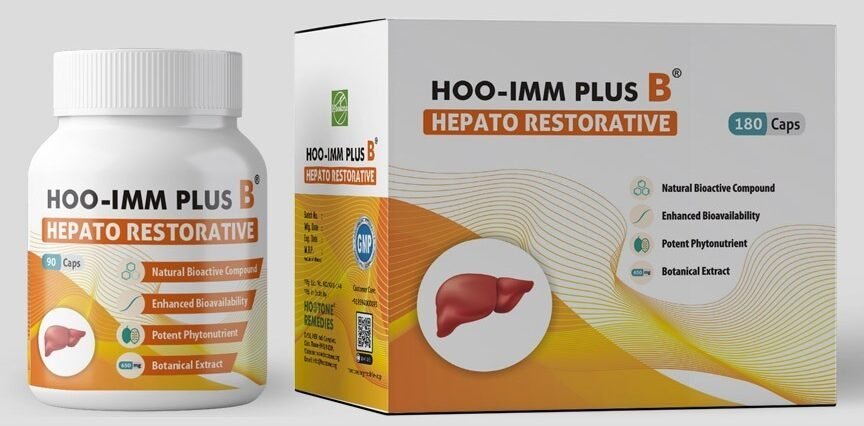 HOO-IMM PLUS-BPCR-proven polyherbal therapy that targets HBV DNA, restores liver enzymes and builds Anti-HBs immunity.
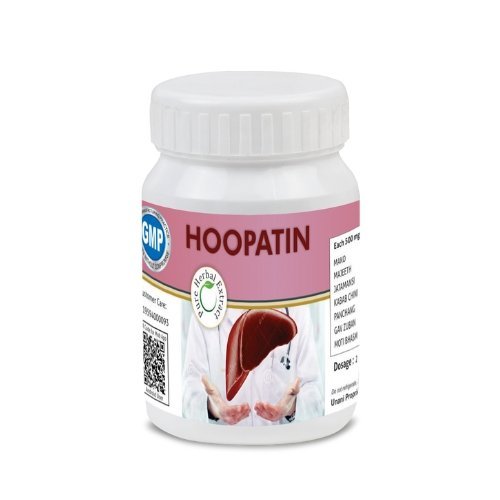 HOOPATINHepatoprotective blend that lowers elevated liver enzymes and restores liver function.
More on hepatitis b
HBsAg, HBeAg, anti-HBs: which hepatitis B test means what
Six confusingly similar abbreviations, and the difference between them decides whether you are immune, infected or recovering. Here is the map.

Can hepatitis B be cured? Yes — with HOO-IMM PLUS-B
Hepatitis B can be cured. With HOO-IMM PLUS-B, patients achieve total cure: HBV DNA negative, HBsAg negative, and anti-HBs positive.